News

Featured News
- Legislative & Regulatory
- Claims & Litigation
The Texas Division of Workers’ Compensation has scheduled a public hearing on proposed changes involving its return-to-work guidelines. Texas continues to examine rules affecting claim administration, medical treatment and return-to-work practices.
Hearing date: August 24, 2026
Hearing date: August 24, 2026

- Research / Industry Trends
- Carrier
NCCI’s August Labor Market Insights reported that U.S. employment declined by 23,000 jobs in July, while prior May and June estimates were revised downward by another 103,000 jobs. Leisure and hospitality and retail employment declined, while construction and health care continued to grow. NCCI also noted that slowing wage and employment growth is putting downward pressure on workers’ compensation payroll growth.

- Medical
- Research / Industry Trends
NCCI reviewed the 2026 CMS reimbursement changes most relevant to workers’ compensation. Physician services account for roughly 40% of nationwide workers’ compensation medical expenditures, and facility costs represent another roughly 40%. For 2026, the Medicare physician conversion factor rose 3.3%, while facility base rates received moderate increases. NCCI said the CMS changes themselves are not expected to create significant overall upward pressure on workers’ compensation medical costs, although the effect will vary by state and fee-schedule structure.
- Insurance
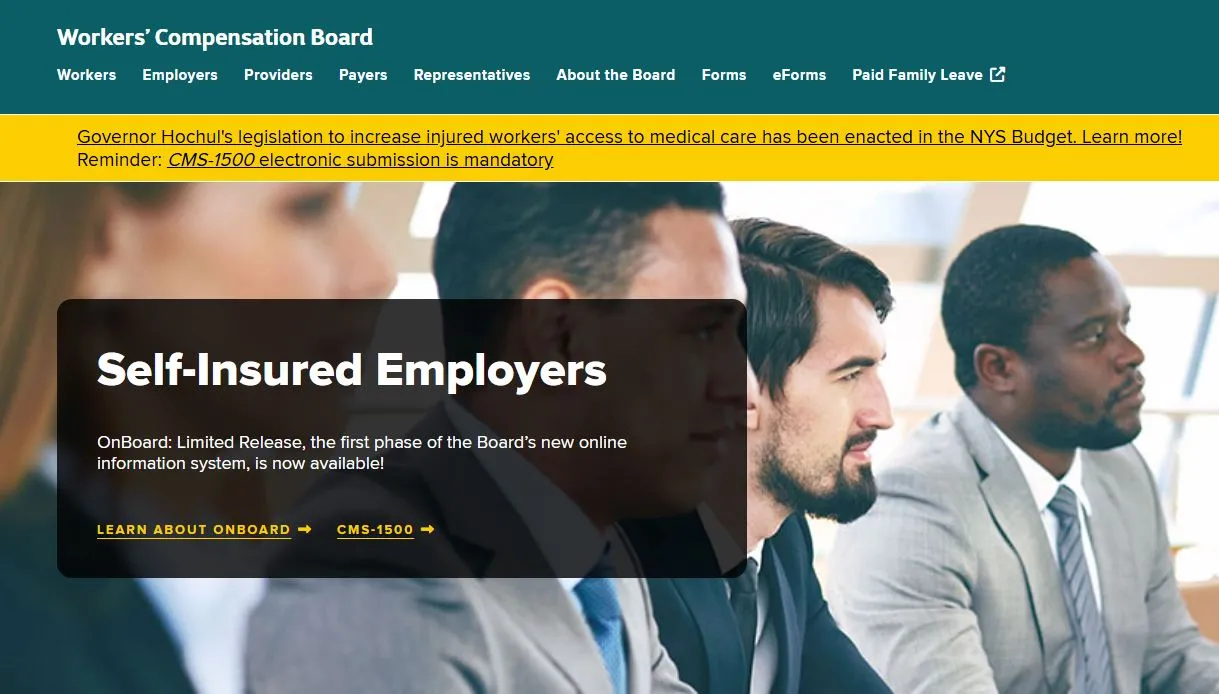
New York State employers are required to provide workers’ compensation, disability, and Paid Family Leave benefit coverage to their employees.
Under the Workers’ Compensation Law of New York State (WCL)
Article 4 §50 states that one way in which employers may provide workers’ compensation coverage is by applying to become an approved self-insured employer in New York
Article 9 §211 states that one way in which employers may provide disability and Paid Family Leave benefits coverage is by applying to become an approved self-insured employer in New York
Under the Workers’ Compensation Law of New York State (WCL)
Article 4 §50 states that one way in which employers may provide workers’ compensation coverage is by applying to become an approved self-insured employer in New York
Article 9 §211 states that one way in which employers may provide disability and Paid Family Leave benefits coverage is by applying to become an approved self-insured employer in New York

- Legislative & Regulatory
Texas DWC has active rulemaking involving its return-to-work guidelines and rules governing maximum medical improvement and permanent impairment evaluations. Texas has a public hearing on the return-to-work proposal scheduled for August 24.

- Medical
IAIABC is highlighting concerns that broad state PBM-reform laws designed primarily for group health insurance can unintentionally capture workers’ compensation pharmacy programs. Issues include conflicting reimbursement requirements and potential effects on injured-worker access to medications.

- Workers’ Compensation
The Division of Workers’ Compensation (DOWC) is upgrading its claims intake and management process. The DOWC is building a new web-based application called CoComp, in partnership with CapTech Consulting. CoComp aims to make managing workers' compensation claims in Colorado easier and clearer. It will offer a simple, transparent platform for all claims-related activities.
Carriers, Third-Party Administrators (TPAs), and self-insured employers will gain limited access to CoComp on July 20, 2026. All other external stakeholders will gain access between late 2027 and early 2028. Information, training, and resources for all other external stakeholders will be shared in the future.
Carriers, Third-Party Administrators (TPAs), and self-insured employers will gain limited access to CoComp on July 20, 2026. All other external stakeholders will gain access between late 2027 and early 2028. Information, training, and resources for all other external stakeholders will be shared in the future.

- Insurance
A Florida workers’ compensation ruling gives carriers a stronger basis to deny payment for some physician-dispensed medications, potentially reducing reimbursement disputes and improving control over prescription costs. The decision could also prompt a legislative response in Florida.

- OSHA
Safe & Sound Week is a nationwide event held each August that recognizes the successes of workplace safety and health programs and offers information and ideas on how to keep America’s workers safe. This year Safe & Sound Week will provide resources and activities for businesses on safety and health recognition.

Maryland: Legislation is being proposed that would broaden the pool of professionals who can assess permanent impairments in Workers’ Compensation claims.